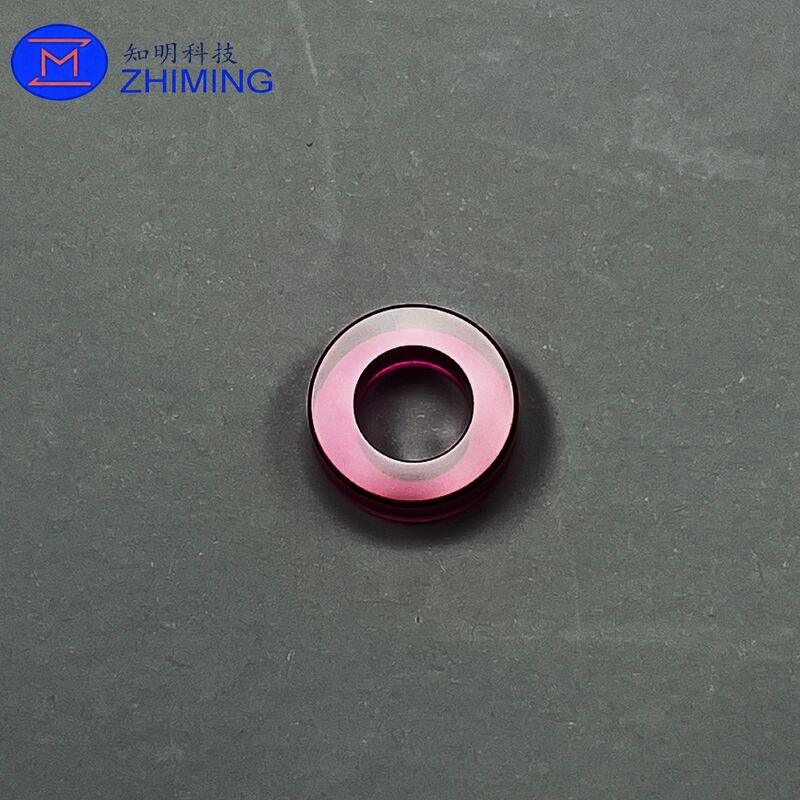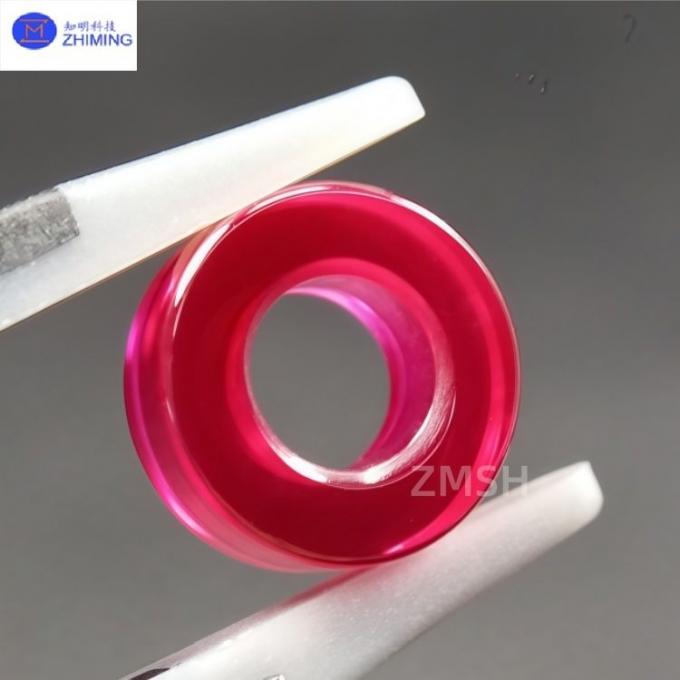
Customized Ruby Jewel Bearings (Al₂O₃) for Precision Instruments and Watch Movements
Ruby bearings are manufactured from synthetic corundum (Al₂O₃) doped with chromium to produce their characteristic red color. With a Mohs hardness of 9 and extremely low friction characteristics, ruby jewel bearings are essential components in micro-precision mechanisms requiring long-term stability, dimensional accuracy, and superior wear resistance.
Engineered through ultra-precision grinding and optical-grade polishing (Ra < 0.3 nm), these bearings deliver outstanding performance in high-sensitivity, low-load rotational systems such as watch movements, metering instruments, aerospace navigation equipment, and scientific measuring devices.
![]()
![]()
| Parameter | Value |
|---|---|
| Material | Synthetic corundum Al₂O₃ (chromium-doped) |
| Hardness | Mohs 9 |
| Static Friction | 0.10–0.15 |
| Temperature Range | –200°C ~ +800°C |
| Surface Roughness | Ra < 0.3 nm |
| OD Range | 0.8–10 mm |
| Height | 0.6–5 mm |
| Bore Diameter | 0.05–3 mm (±0.001 mm) |
| Corrosion Resistance | Acid/alkali/oxidation resistant |
Material: Synthetic corundum (Al₂O₃), chromium-doped
Mohs Hardness: 9 (second only to diamond)
Knoop Hardness: ~1,800
Surface Roughness: Ra < 0.3 nm (optical-grade polish)
Static Friction Coefficient: 0.10–0.15 (ruby vs. steel)
Corrosion Resistance: Resistant to acids, alkalis, oxidation, moisture
Benefits: Extremely low wear, minimal frictional loss, exceptional operational precision.
High Temperature Stability: Operates from –200°C to +800°C
Lubrication-Free Operation: Ultra-smooth crystal structure
High Dimensional Stability: Low thermal expansion and excellent rigidity
Long Service Life: No metallic abrasion, minimal deformation
Non-Magnetic & Electrically Insulating: Ideal for sensitive instruments
Available in multiple precision geometries:
Spherical jewel bearings
Conical / V-cup bearings
Straight-hole (through-hole) bearings
Ring-type jewel bearings
Dimensions:
OD: 0.8–10 mm
Height: 0.6–5 mm
Bore diameter: 0.05–3.0 mm (±0.001 mm tolerance)
Customization based on drawings is supported.
Balance wheel pivots
Escapement components
Gear train pivots
Typical mechanical watches use 17–25 jewels to minimize friction and improve accuracy.
Galvanometers
Micrometers
Flow meters & energy meters
Gyroscopes & metrology equipment
Ensures low starting torque, low drift, and stable long-term accuracy.
Inertial navigation systems
Gyro-stabilized platforms
High-vibration, high-temperature environments
Dental handpieces
Surgical instruments
Pump mechanisms
Blood analysis devices
Wafer-handling robots
Precision stages
Optical alignment modules
1. Why is ruby used for precision bearings?
Because it provides extremely low friction, exceptional wear resistance, and long-term dimensional stability—far superior to metal bearings.
2. Do ruby bearings require lubrication?
In many applications, no. The polished crystal structure provides natural low-friction performance.
3. Are ruby and sapphire bearings the same?
Yes—both are Al₂O₃ single crystals. Ruby contains chromium (red color), sapphire is typically clear/blue.
4. Can ruby bearings work in harsh environments?
Yes. They resist acids, alkalis, high temperature, humidity, and vibration.
5. Are jewel bearings suitable for high-speed micro-rotation?
Yes. Their low friction and micro-scale precision make them ideal for watch escapements, micro-motors, and sensitive instruments.
Related Products