| Brand Name: | ZMSH |
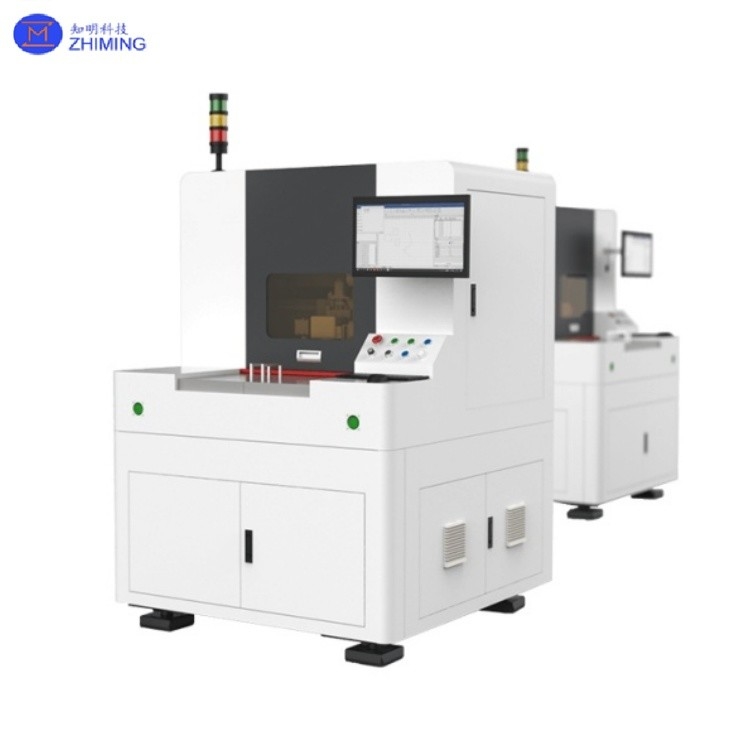
| Model Number: | Infrared Nanosecond Laser Drilling equipment |
| MOQ: | 2 |
| Price: | by case |
| Delivery Time: | 5-10months |
| Payment Terms: | T/T |
Abstract
Infrared Nanosecond Laser Drilling equipment Large-Format for Glass Substrates
The infrared nanosecond laser glass drilling system is an advanced manufacturing platform that utilizes 1064 nm infrared nanosecond pulsed lasers to achieve high-precision and high-efficiency micro-hole processing on glass substrates. By employing short pulses (1-100 ns) with high energy density, the system combines photothermal ablation and mechanical shock mechanisms to produce micron-scale apertures (20-500 μm) while effectively minimizing the heat-affected zone (HAZ) and preventing material cracking or edge chipping.
Compared to conventional mechanical drilling or CO₂ laser processing, this technology offers distinct advantages, including non-contact operation, zero tool wear, and exceptional flexibility, making it particularly suitable for complex micro-hole formation in ultra-thin glass and high-hardness brittle materials (e.g., quartz, sapphire glass). Key applications span consumer electronics (camera cover lenses, displays), photovoltaics (solar cells), automotive sensors, and medical microfluidic devices. The system is typically equipped with a large-format motion platform (e.g., ≥600×600 mm) and high-speed galvanometer scanning, enabling automated batch production with optimized throughput (hundreds of holes per second) and cost efficiency. As such, it has emerged as a critical technology in modern precision glass machining.
Main parameter
| Laser type | Infrared nanosecond |
| Platform size | 800*600(mm) |
| 2000*1200(mm) | |
| Drilling thickness | ≤20(mm) |
| Drilling speed | 0-5000(mm/s) |
| Drilling edge breakage | <0.5(mm) |
| Note: Platform size can be customized. | |
![]()
Working Principle
1. Laser Generation: The system employs laser sources (e.g., Nd:YAG or fiber lasers) to generate infrared light at 1064 nm wavelength with nanosecond-scale pulse durations (1ns = 10ns).
2. Energy Focusing: The laser beam is concentrated into micron-scale spots via optical systems (e.g., galvanometers and F-θ lenses), achieving extremely high energy density (up to GW/cm² level).
3. Material Interaction: Nanosecond pulsed lasers interact with glass through photothermal and photomechanical effects:
· Photothermal Effect: Laser energy absorption induces localized heating, causing material melting or vaporization.
· Photomechanical Effect: Short pulses generate shockwaves that produce micro-explosive fractures, forming cavities.
4. Layer-by-Layer Removal: Controlled pulse counts and scanning paths enable precise material ablation, creating high-accuracy holes.
Technical Features
1. High Precision: Hole diameters of 20-500 μm, depths up to several millimeters, with wall roughness (Ra) <1 μm.
2. Non-Contact Processing: Eliminates mechanical stress, ideal for brittle glass (e.g., quartz, borosilicate).
3. Controlled Thermal Impact: Nanosecond pulses minimize heat diffusion, preventing edge cracks (vs. millisecond lasers).
4. High Flexibility: Capable of forming complex geometries (round, square, tapered holes) and micro-hole arrays.
The infrared nanosecond laser drilling system delivers versatile and high-precision machining capabilities for glass and other brittle materials, covering a wide range of hole sizes, thicknesses, and processing modes. By combining a large-format motion platform with high-speed galvanometer scanning, the system supports both prototype development and high-volume industrial production.
Soda-lime glass
Borosilicate glass
Quartz glass
Sapphire glass
Coated or laminated glass substrates
Minimum hole diameter: 20 μm
Maximum hole diameter: 500 μm
Consistent diameter uniformity across large-area substrates
Single-side drilling thickness: up to 20 mm
Suitable for ultra-thin glass as well as thick structural glass
Through-holes and blind holes
Circular, square, and customized shaped holes
Tapered and stepped micro-holes
High-density micro-hole arrays
Edge chipping control: < 0.5 mm
Hole wall roughness: Ra < 1 μm
Minimal heat-affected zone (HAZ)
Crack-free edges with excellent repeatability
Scanning speed: 0–5000 mm/s
Throughput: hundreds of holes per second (depending on material and thickness)
Optimized for automated batch processing and continuous operation
Precision grooving and slotting
Film and coating removal
Surface micro-texturing and patterning
Multi-process integration in a single setup
Standard platform sizes: 800 × 600 mm, 2000 × 1200 mm
Custom platform dimensions available upon request
Ideal for large glass panels and multi-piece batch processing
Process Applications
Suitable for drilling, grooving, film removal, and surface texturing of brittle/hard materials, including:
1. Drilling and notching for shower door panels;
2. Hole drilling for appliance glass;
3. Solar panel perforation;
4. Switch/socket cover drilling;
5. Mirror film removal and drilling;
6. Custom grooving and surface texturing;
Advantages
1. Large-format platform accommodates diverse product sizes across industries.
2. Complex hole geometries achieved in single-step processing.
3. Minimal edge chipping with smooth machined surfaces.
4. Seamless transition between product specifications; user-friendly operation.
5. Low operating costs, high yield, no consumables, and pollution-free.
6. Non-contact processing prevents surface scratches.
![]()
![]()
Machining effect——Sample display
![]()
Q&A
1. Q: How does a nanosecond laser drill glass?
A: It uses 1064nm infrared pulses (1-100ns) to melt/vaporize glass with minimal heat damage, creating precise 20-500μm holes.
2. Q: Why choose nanosecond lasers for glass drilling?
A: Key benefits: No cracking (low heat), High speed (100+ holes/sec), Works on brittle materials,No tool wear.
Tag: #Infrared Nanosecond Laser Drilling equipment, #Large-Format, #Glass Substrates