| Brand Name: | ZMSH |
| MOQ: | 1 |
| Delivery Time: | 2-4 WEEKS |
| Payment Terms: | T/T |
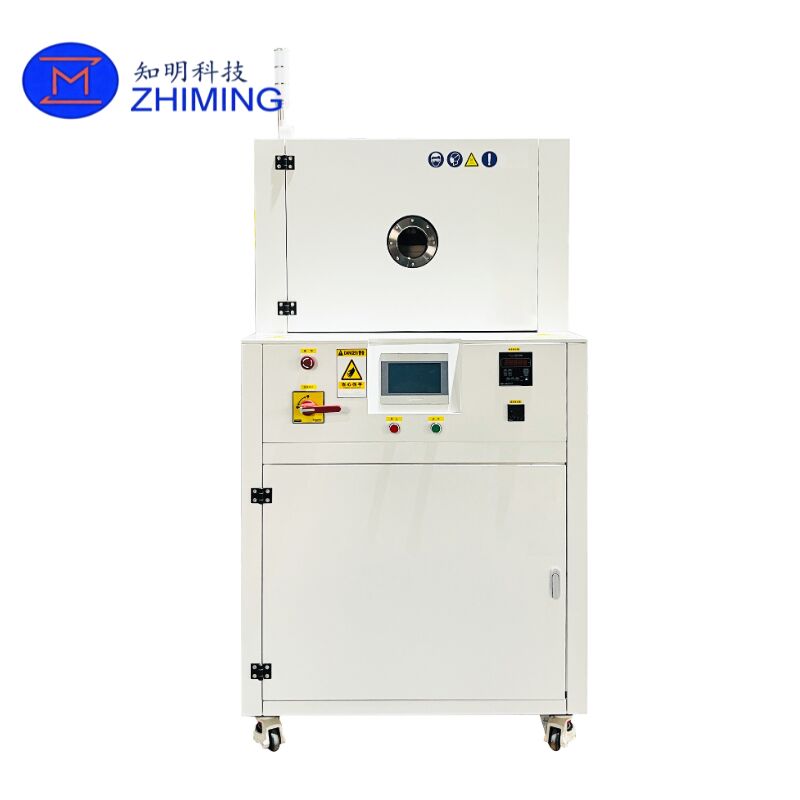
The SiC Sintering Furnace is designed for high-temperature sintering and carbonization of wafers, SiC seeds, graphite paper, and graphite plates. When paired with the SiC Fully Automatic Spray Bonding Machine, it ensures bubble-free, uniformly pressed, high-precision SiC bonded products.
The furnace allows adjustable temperature, pressure, and sintering time, guaranteeing complete adhesive carbonization and stable chemical bonding. It is ideal for high-temperature, high-strength, and corrosive environments, providing a stable, high-yield (>90%) production process for SiC seed bonding, semiconductor wafer preparation, and high-precision material bonding.
![]()
High-Temperature Sintering and Carbonization
Bonded wafers, SiC seeds, graphite paper, and graphite plates undergo controlled high-temperature treatment.
Adhesive layers are fully carbonized and cured, forming a stable chemical bond.
Uniform Pressing
Adjustable pressure ensures even bonding across the interface, preventing local warping or voids.
Vacuum-assisted and bubble detection features achieve bubble-free sintering.
Programmable Process Parameters
Temperature, pressure, ramp-up/ramp-down profiles, and dwell time are fully programmable.
Adapts to different material characteristics and process requirements, ensuring consistent bonding strength and reliability.
High-Precision Temperature Control: Uniform furnace temperature for consistent bonding results.
Adjustable Pressure System: Ensures uniform interface compression.
Vacuum Assistance: Removes air bubbles for defect-free bonding.
Programmable Process Control: Automatic ramp-up, dwell, and cool-down cycles, with multiple stored recipes.
Modular Design: Easy maintenance and future expandability.
Safety Features: Over-temperature and over-pressure protection, operation interlocks.
![]()
| Parameter | Specification | Notes |
|---|---|---|
| Furnace Chamber Size | Customizable per wafer size | Supports single or multiple wafers |
| Temperature Range | 100–1600 °C (customizable) | Suitable for different SiC bonding materials |
| Temperature Accuracy | ±1 °C | Ensures uniform sintering |
| Pressure Range | 0–5 MPa | Adjustable for uniform pressing |
| Ramp-Up/Down Rate | 1–10 °C/min | Adjustable per process |
| Vacuum Level | ≤10⁻² Pa | Removes internal air bubbles, improves bonding yield |
| Power Supply | 220V / 380V | Per customer requirement |
| Cycle Time | 30–180 min | Adjustable based on material thickness and process |
SiC Seed Bonding: High-temperature sintering and carbonization for strong and uniform bonding.
Semiconductor Wafer Preparation: Sintering single or multi-crystal SiC wafers.
High-Temperature, Corrosion-Resistant Materials: High-performance ceramics and graphite-based composites.
R&D and Pilot Production: Small-batch, high-precision material sintering.
High Yield: When combined with the automated spray bonding machine, bonding yield exceeds 90%.
High Stability: Adjustable temperature, pressure, and vacuum ensure consistent sintering results.
High Reliability: Key components meet international standards for long-term stable operation.
Expandable: Modular design allows multi-wafers or larger wafer sizes.
User-Friendly Operation: Programmable interface automates the entire sintering cycle.
Q1: What materials can the SiC Sintering Furnace process?
A1: Wafers, SiC seeds, graphite paper, graphite plates, and other high-temperature, corrosion-resistant materials.
Q2: Are temperature and pressure adjustable?
A2: Yes. Temperature ranges from 100–1600 °C and pressure from 0–5 MPa. Both are fully adjustable per material and process requirements.
Q3: How is bubble-free sintering ensured?
A3: The furnace integrates vacuum-assisted evacuation and uniform pressing, guaranteeing bubble-free and complete bonding.
Q4: Can multiple wafers be processed at once?
A4: Yes. The chamber can be customized for single or multiple wafers.
Q5: What is the typical sintering cycle time?
A5: Adjustable, generally 30–180 minutes, depending on material thickness and process settings.