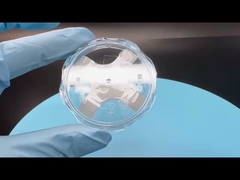
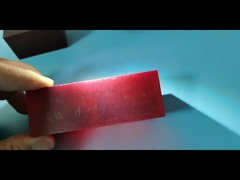
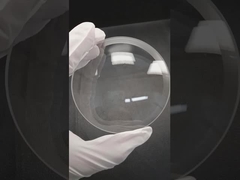
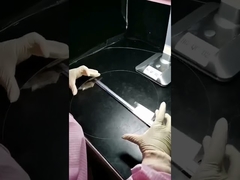
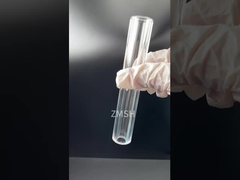
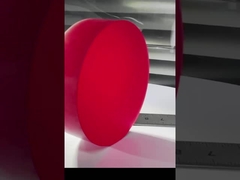
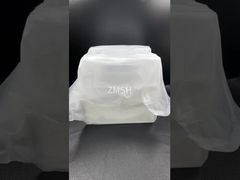
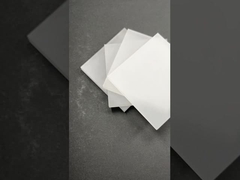
Brief: We show the practical steps and results so you can judge suitability quickly. This video demonstrates the manufacturing process of Silicon Carbide Rectangle Substrate SiC Chips, from crystal growth through PVT to final polishing. You'll see how these advanced semiconductor substrates are produced for high-power electronics, RF devices, and optoelectronic applications.
Related Product Features:
Available in 4H-SiC and 6H-SiC polytypes for high-voltage power electronics and RF applications.
Features wide bandgap of 3.2-3.3 eV for high breakdown voltage and efficiency.
Excellent thermal conductivity (3.0-4.9 W/cm*K) ensures superior heat dissipation.
High mechanical strength with Mohs hardness of ~9.2 for durability in harsh environments.
Customizable dimensions and thickness (330-500 μm) to meet specific application needs.
Available with N-type or P-type doping options for tailored electrical performance.
Single or double-side polished surface finish, including epi-ready options.
Ideal for power electronics, RF devices, optoelectronics, and aerospace applications.
Faqs:
Why choose SiC substrates over traditional silicon?
SiC offers superior thermal performance, higher breakdown strength, and significantly lower switching losses compared to silicon, making it ideal for high-efficiency, high-power applications.
Can these substrates be provided with epitaxial layers?
Yes, we offer epi-ready and custom epitaxy options for high-power, RF, or optoelectronic device applications.
Can you customize the dimensions and doping?
Absolutely. Custom sizes, doping profiles, and surface treatments are available to meet specific application needs.
How do SiC substrates perform under extreme conditions?
SiC substrates maintain structural integrity and electrical stability at temperatures over 600°C, making them suitable for harsh environments such as aerospace, defense, and high-power industrial applications.